
Do you want to write a middle grade mystery?
Time for Beat 3 in your mystery: Reactions and Complications.

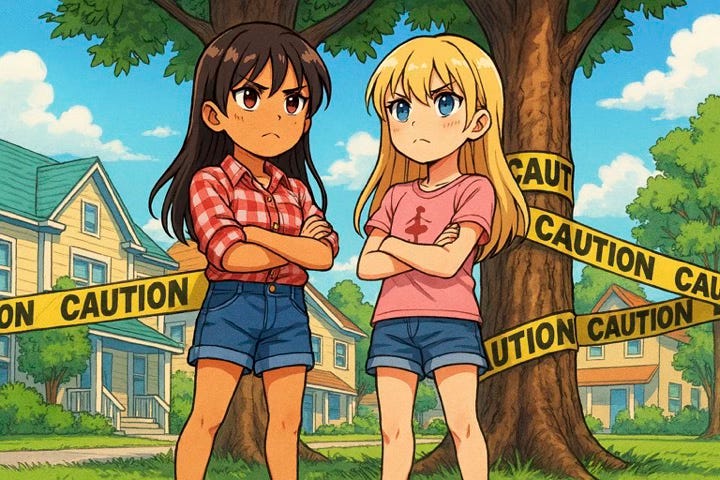
After the “crime” explodes into your story, you can’t just slap up some caution tape and jump straight to the solution. Beat 3, “Reactions and Complications,” is where the people drama kicks in and turns one event into a full mystery.
First, show personal reactions
How does your detective actually feel about the crime? Are they shocked that something like this could happen:
At their school?
On the orbiting Space Port?
At the campground?
In the magical bookstop?
Are they secretly excited that a real mystery has finally arrived? Scared they’ll be blamed? Annoyed that this mess is going to ruin their weekend plans?
Let us (the reader) see whether they want to help, or would rather pretend nothing happened and stay out of trouble.
Next, show the social ripples
A mystery doesn’t just affect one person; it shakes the whole “pond.”
How do teachers respond—strict, calm, panicked?
What about parents, friends, the principal, or social media?
Maybe the wrong kid gets blamed.
Maybe rumors explode on group chats.
Maybe adults try to cover it up and say, “Everything’s fine,” when obviously it isn’t.
Then, add early obstacles—ALWAYS add obstacles!
Something should make it harder to solve the problem right away. IMO, this is the KEY to good mysteries!
A teacher might shut down questions.
A key friend refuses to talk.
A parent forbids your sleuth from getting involved.
Important evidence could mysteriously “disappear,” or a video gets deleted.

These reactions and complications do two important jobs:
(1) They stop your story from being solved in one chapter, and (2) they show what’s really at stake.
If they decide to solve the crime, your detective might risk losing friends, getting in trouble, or giving up their free time. If they walk away, the wrong person could be punished—or the bad stuff could keep happening.
That tension is what pulls readers forward: we want to know not just who did it, but what your sleuth is willing to risk to find the truth. And that’s super important:
Why does your sleuth WANT and NEED to solve this case?
Are you looking for a guide to writing mysteries? We’ve written one!