
Beyond the Deadline: How Patience Can Shape Great Stories ♣️
Writer Compass Advice and Opinion

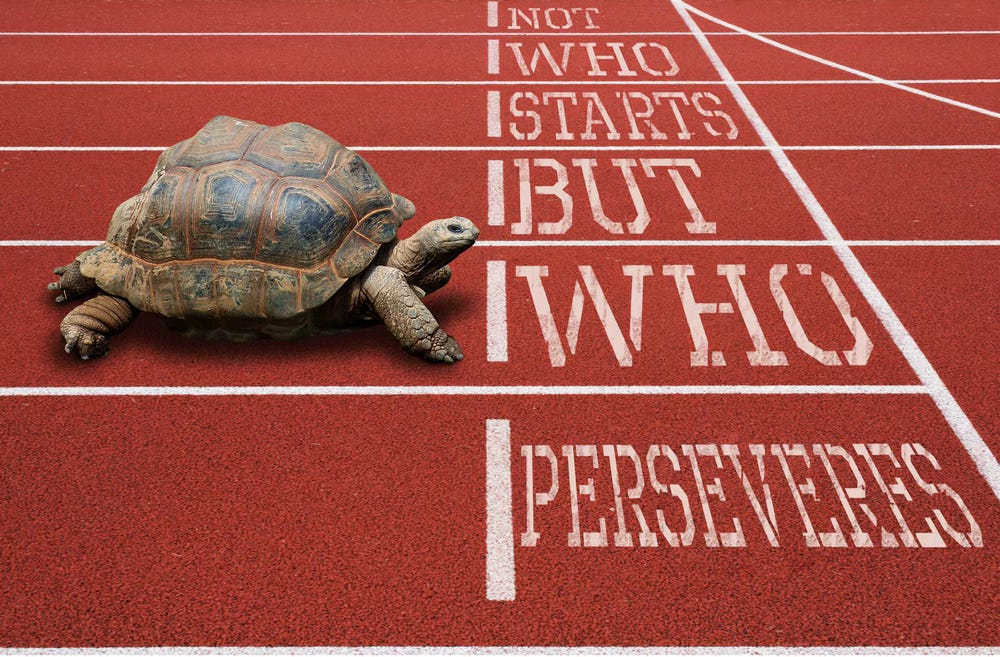
In today’s publishing world, the pressure to write fast is relentless—especially for independent/self-published authors. The “algorithms” of digital publishers can drive us like lemmings over a cliff. This isn’t a slight against traditionally published writers. Multibook contracts often come with annual deadlines for each book, which is demanding for works of 80,000 to 90,000 words. (That’s the typical length in my chosen genre: contemporary mystery.)
Social media buzzes with stories of authors releasing three, five, seven, even ten(!) books a year. Writing workshops and forums overflow with tips to boost daily word count and hacks to skyrocket productivity. Type faster! Use keyboard shortcuts! Don’t edit while drafting!
Here’s the catch—at least for me. I tried that last hack on my previous two books … and it killed my post-first-draft productivity, slowing my writing to a glacial pace. The revisions on my latest WIP felt like I was rewriting the entire book every time I opened the manuscript. It was so frustrating that sometimes I would wash dishes instead of sitting down to write—and I HATE washing dishes.
The Benefits of Slowing Down
This frustration forced me to reflect. To realize I’m a two-steps-forward, one-step-back kind of author. And that as I mature in my craft, writing isn’t a sprint anymore. It’s more of a winding hike up a mountain, with plenty of pauses to catch my breath and reconsider the best path forward.
For example, when I allowed myself to slow down, I found unexpected depth in my protagonist’s arc in Echo of Lies (2026)—moments I would have missed if I’d continued to race to the finish line. That slower pace gave me space to explore themes and character arcs and contradictions that enriched the story and made it more satisfying to write and, I hope, to read.
Inviting Reader Reflection
You’d think I’d have already realized the value of slowing down and letting the story breathe after ten years of writing and eight years of publishing. But I was caught up in the prevailing wisdom: If you don’t release your next book quickly, readers will move on, and your career will stall. That’s a heavy burden to carry and one that, frankly, can stifle creativity instead of spur it forward.
I’m not suggesting there’s a single right way to write. Many authors thrive with a write-fast, publish-fast approach, and that model clearly works well for some. But for those of us drawn to stories and characters that linger long after the final page—the kind of fiction I most admire and aspire to create—it’s worth pausing to ask: Is speed always the answer? When might it be more rewarding to slow down and use our experience to deepen a story’s purpose and resonance?
Literary Layers in a Genre World
This article grew out of a realization I had after reading John Green’s Turtles All the Way Down (2017). Green spent years crafting that novel, and the result is a story where every character and subplot is intricately woven to reflect or challenge the protagonist’s inner world. The level of craft and intention behind each scene was a shock of inspiration for me. The book’s emotional complexity stayed with me long after I finished reading, showing just how much patience and thoughtful revision can shape a novel.
Reading Turtles prompted me to rethink my process. I want my stories to resonate in the same way Green’s do—by offering emotional depth and layers that invite readers to linger, reflect, and feel. I’ve realized that writing with this kind of purpose may take more time than I once allowed myself. But I’m learning to accept that, and to value the slower, more deliberate journey toward stories that truly matter to me.
If you find yourself longing for greater depth or questioning the rush to the finish line, give yourself permission to slow down. I’m realizing that my best stories happen when I trust my process, which allows me to take the time to explore the layers of my characters and themes.
For you? Just try it. Slow your process down a little. The depth you uncover in your writing—and in yourself—may be what makes your work unforgettable, and ultimately, more meaningful to you.
♣️